
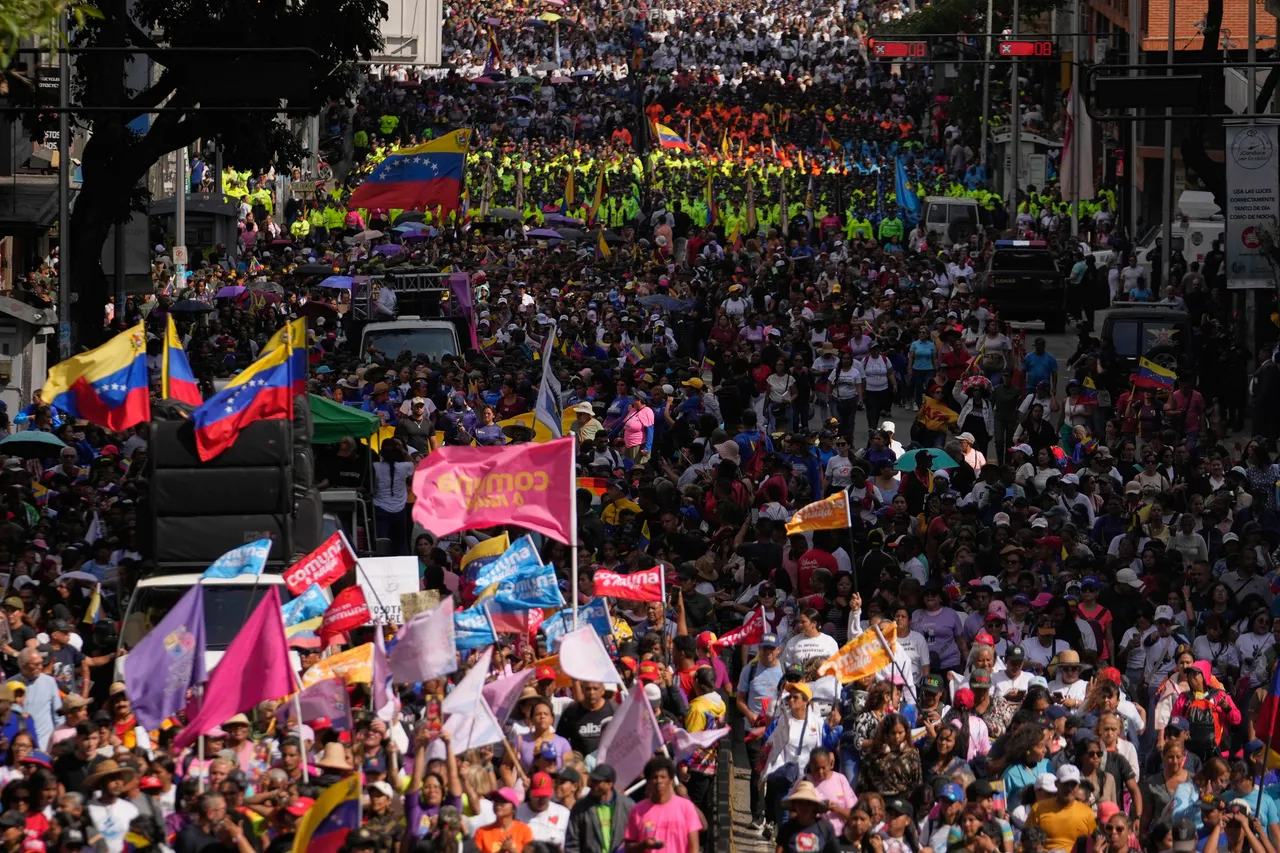
The comments section of any video discussing socialism reveals a predictable trilogy of objections: social democracies like Sweden are the preferable alternative, Venezuela was destroyed by socialist policies, and Javier Milei is courageously saving Argentina from leftist ruin. The first argument I addressed elsewhere. The latter two demand a more rigorous historical and materialist examination.
Before proceeding, we must establish what socialism actually means in this context. Socialism, properly understood, is worker control and democratic management of the means of production. Markets, where they exist, remain subordinate to human well-being. The profit motive yields to the principle that no one goes hungry or houseless while excess is destroyed or homes sit vacant. Socialism manifests differently across traditions—from Leninists to anarchists—but the common thread is the democratization of economic power.
My own conception favors decentralization: worker cooperatives, councils, and dual power structures that minimize state bureaucracy while maximizing working-class control over capital. This matters because when we examine Venezuela, we must distinguish between centralized state capitalism and genuine worker control.
The Venezuelan Tragedy: A Century in the Making
The standard narrative presents Venezuela as a cautionary tale of socialist excess. This requires erasing over a century of history that precedes Chavismo entirely.
American Empire and the Making of a Petrostate
In 1908, the United States Navy facilitated a coup that installed Juan Vicente Gómez, a dictator described by a later Venezuelan president as "an instrument of foreign control of the Venezuelan economy." Gómez protected American oil interests and brutalized his people with Washington's blessing. This pattern repeated with Marcos Pérez Jiménez in the 1950s—another US-backed tyrant who welcomed transnational corporations while suppressing Venezuelans.
The result was an economy structured entirely around oil extraction for foreign benefit. Venezuela became a classic petrostate: rich in a single resource, utterly dependent on its extraction, and managed by elites who prioritized American interests over national development. The resource curse—also called Dutch disease—took hold. When a country possesses abundant natural resources, it often fails to diversify its economy. Why develop other sectors when oil money flows so freely? Venezuela used petroleum revenue to import everything it needed, indefinitely postponing the development of domestic industry.
This context is essential. When Hugo Chávez won election in 1998, he inherited a country already deformed by a century of imperial extraction and elite enrichment.
The Bolivarian Revolution: Successes and Failures
Chávez launched the Bolivarian Revolution, implementing social reforms that objectively improved living standards. Poverty and illiteracy declined. Healthcare expanded. The state nationalized oil industries—a move that, whatever its flaws, attempted to redirect Venezuela's wealth toward Venezuelans rather than foreign shareholders. Chávez even supplied free heating oil to hundreds of thousands of poor Americans in winter, a gesture of solidarity that Washington repaid with hostility.
The United States responded with predictable aggression: coup attempts, economic sanctions, and diplomatic demonization. The Obama administration bizarrely declared Venezuela a national security threat—a nation that has never invaded anyone, backed death squads, or drone-struck weddings, unlike the country making the declaration.
But Chávez also made catastrophic economic errors. He devalued the bolívar, fueling inflation. He neglected oil infrastructure maintenance. He failed to learn the industry on which his country depended. Most critically, he treated high oil prices as permanent rather than cyclical, spending boom revenues without saving for the inevitable bust. He never diversified Venezuela's exports or developed other economic sectors. When oil prices plummeted after his 2013 death, the country had no buffer.
Maduro, Sanctions, and the Simplification of Blame
Nicolás Maduro inherited an impossible situation: a petrostate with collapsing oil revenues, a leader who refused to maintain the industry, and a US sanctions regime deliberately designed to strangle the economy. His response—printing money to maintain social programs—produced hyperinflation. His corruption is real and indefensible. The image of him sneaking food on live television while his people starve captures something genuinely damning.
But blaming "socialism" for Venezuela's collapse requires ignoring everything that preceded it. It requires forgetting that Venezuela experienced devastating crises in the 1980s and 1990s under right-wing governments. When oil prices crashed in the 1980s, Venezuela found itself $33 billion in debt and accepted an IMF loan. The IMF's conditionality meant privatization, deregulation, social program cuts, and economic opening to foreign investment—the standard neoliberal medicine. These policies produced inequality, rioting, looting, and political turmoil that created the conditions for Chávez's popularity.
It also requires ignoring Bolivia, where Evo Morales's incremental socialist policies raised living standards dramatically. Under Morales, extreme poverty fell by more than half. GDP grew average 4.8% annually from 2004 to 2017. The World Bank reclassified Bolivia from lower-income to lower-middle-income status. Socialism didn't destroy Bolivia because Bolivia, unlike Venezuela, diversified its economy and managed its resources prudently.
Venezuela's tragedy is not the tragedy of socialism. It is the tragedy of a petrostate deformed by imperialism, mismanaged by corrupt elites of all ideological stripes, and finally strangled by sanctions while a cartoonishly incompetent successor stumbled through a crisis he was never equipped to handle.
Argentina's Libertarian Experiment: Shock Therapy and Human Suffering
If Venezuela represents the Right's favored cautionary tale, Javier Milei's Argentina represents its aspirational model—a libertarian president bravely wielding the chainsaw against the state. The reality is considerably darker.
The Logic of Shock Therapy
Javier Milei, a right-wing libertarian of ostentatious principle, campaigned on cutting government spending, mass privatization, deregulation, and the full libertarian program. This approach has a name in economic literature: shock therapy. The strategy works best when implemented immediately after a natural disaster, war, or economic crisis—moments of public disorientation when populations are too distracted to resist unpopular measures. As Naomi Klein documented extensively, shock therapy exploits crisis to push through policies that would otherwise face massive opposition. And when people resist, they face "shock for a third time by police, soldiers, and prison interrogators."
Milei inherited an Argentina already in crisis—the necessary precondition for shock therapy. Within months, he delivered.
The Human Cost of Austerity
Milei devalued the currency by over 50%, immediately impoverishing anyone holding pesos. His austerity program increased poverty from 42% to 53% in six months—the highest level since 2003. Child poverty approached 70%. Energy subsidy cuts produced a 360% increase in subway fares. Price control elimination meant essential goods and rent became unaffordable. One supermarket worker in Buenos Aires reported his rent had soared 90% after real estate deregulation and his electricity bill had nearly tripled after subsidy cuts. "They say things are getting better," he told the Associated Press, "but how? I don't understand."
To his credit, Milei cooled month-over-month inflation and achieved a budget surplus—the first in years. But this came through the largest public spending cut in three decades, achieved by pauperizing the population. A taxi driver put it plainly: "The world that the government lives in with all these numbers saying the economy is great—it's a fantasy. In the real world, this economy makes it really hard to feed my son."
This is the difference between economic indicators and human welfare. A budget surplus achieved by making 53% of the population poor enough to stop consuming is not an achievement; it is a confession.
The Peso, the Dollar, and Monetary Sovereignty
Milei's currency devaluation reflects his stated goal: abandoning the peso entirely for the US dollar. Surrendering monetary sovereignty means Argentina would lose the ability to respond to its own economic conditions with its own policy tools. It would hand control of its money supply to the Federal Reserve, which answers to American, not Argentine, interests. This is not libertarianism; it is colonial economics rebranded.
The protests came immediately. The repression followed. A member of Milei's coalition offered protesters "prison or a bullet." Very principled. Very libertarian.
The Materialist Analysis: What Actually Explains These Cases?
Blaming Venezuela on socialism and praising Milei's Argentina requires ignoring almost everything that actually determines economic outcomes.
Imperialism and the Resource Curse
Venezuela's fate was sealed long before Chávez by a century of US intervention that structured its economy around extraction for foreign benefit. The resource curse—the failure to diversify that afflicts petrostates globally—is not a socialist phenomenon. Saudi Arabia is not socialist. The Gulf monarchies are not socialist. They suffer the same dependency because resource wealth, regardless of political system, creates perverse incentives to avoid diversification. Venezuela's tragedy is the tragedy of the petrostate, intensified by sanctions and corruption.
Shock Therapy's Class Character
Milei's policies are not neutral technical adjustments; they are class warfare. Devaluation transfers wealth from workers who hold pesos to exporters and foreign investors. Subsidy cuts transfer resources from the poor who need public services to the rich who benefit from reduced taxation. Deregulation transfers power from labor to capital. The surplus Milei boasts about is extracted from the bodies of Argentine workers. When 70% of children live in poverty, a budget surplus is not an achievement; it is an atrocity.
The Convenience of the Socialist Boogeyman
Socialism functions as a useful rhetorical target because it allows commentators to avoid complexity. If Venezuela's collapse proves socialism's failure, we need not examine US sanctions, IMF conditionalities, or the structural deformities of petrostates. If Milei's austerity is necessary medicine, we need not examine who suffers and who benefits. The socialist boogeyman simplifies a complicated world into moral fable.
But material reality resists such simplification. Venezuela's crisis has many fathers: American empire, elite corruption, oil dependency, economic mismanagement, and yes, Maduro's incompetence. Argentina's "recovery" has many victims: the 53% now poor, the 70% of children now hungry, the workers whose rents tripled while their wages devalued.
Conclusion: Beyond the Boogeyman
The lesson is not that socialism always succeeds or capitalism always fails. The lesson is that ideological labels obscure more than they reveal when divorced from material analysis. Venezuela under Chávez was never pure socialism; it was state capitalism with social programs, dependent on oil revenues, mismanaged by leaders who never democratized economic power. Argentina under Milei is not principled libertarianism; it is shock therapy that pauperizes millions to achieve fiscal targets.
The real question is not whether socialism works or fails. The real question is who controls economic resources, who benefits from economic policy, and whether human well-being or capital accumulation serves as the organizing principle of society. By that measure, Venezuela's tragedy is that ordinary people never truly controlled the oil wealth extracted from their land. Argentina's tragedy is that ordinary people are paying for fiscal discipline with their children's hunger.
The convenient myths of socialist failure and libertarian success serve the same function: they prevent us from asking harder questions about power, about empire, about who decides and who pays. Until we ask those questions, we will continue mistaking symptoms for causes and boogeymen for explanations.
Share this dispatch
About the author
Political Theorist
Sidoc Haytu is a political theorist specializing in Marxism and the cultural politics of race and gender. He is the author of several essays on care work, wages, and the gendered division of labor.
All articles by Sidoc Haytu→