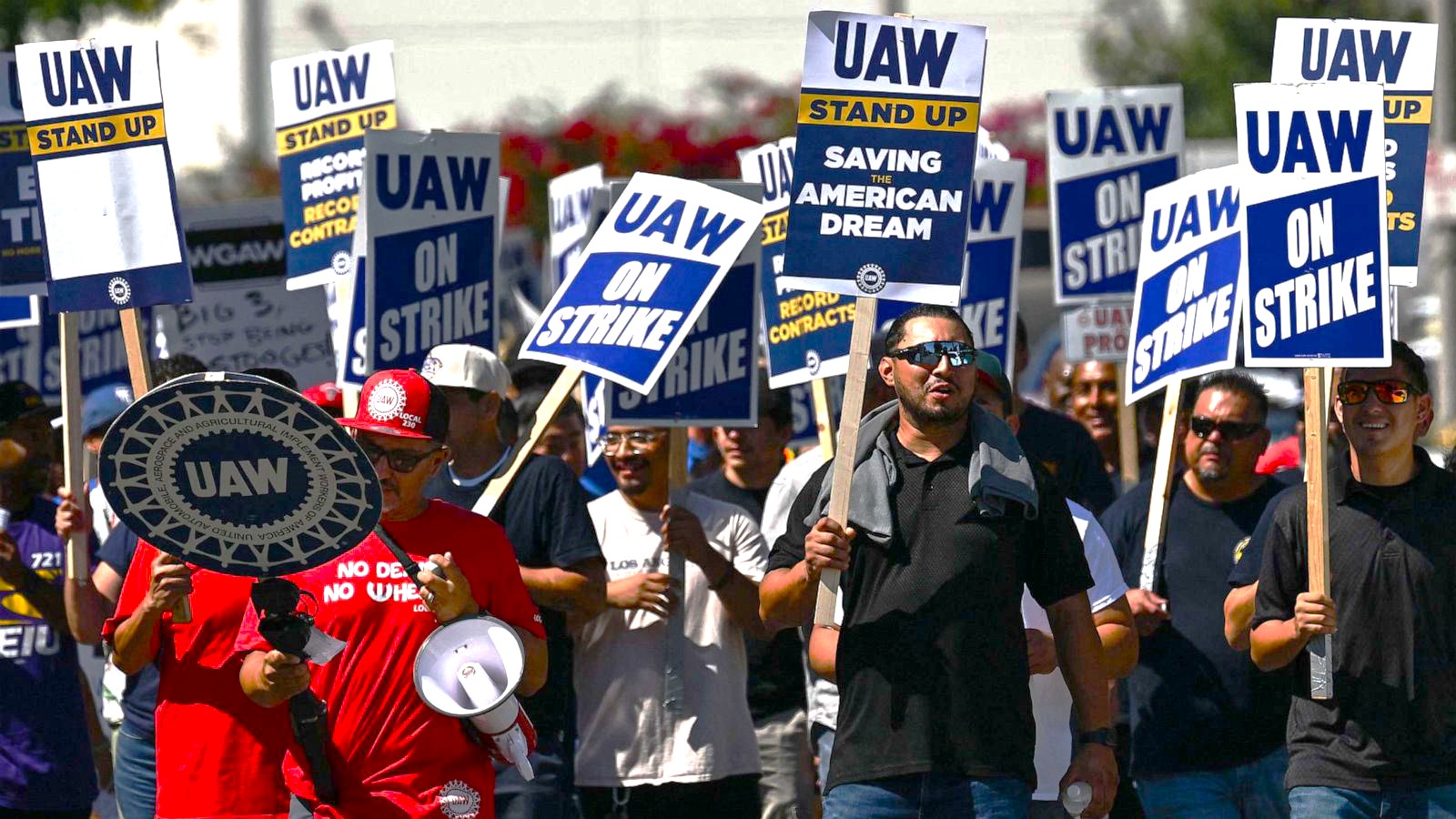
When Shawn Fain, president of the United Auto Workers, went on Facebook Live to announce simultaneous strikes at Ford, General Motors, and Stellantis, he did something American labor leaders had not done in a generation: he put the fear of workers back into the employer class.
The UAW's stand-up strike strategy — targeted, rolling, unpredictable — was a master class in leverage. Rather than striking all facilities at once and exhausting strike funds rapidly, the union struck selectively, forcing management to guess where the next work stoppage would hit while keeping tens of thousands of workers in reserve.
More Than a Contract
The results were historic. The Big Three agreed to:
- Wage increases of approximately 25 percent over four years
- Cost-of-living adjustments
- Faster progression to top pay
- The right to strike over plant closures
- Extension of union agreements to new electric vehicle battery plants
But the UAW fight was about more than wages and benefits. It was a demonstration that the declines of American unionism — precipitous since the 1970s — are not inevitable laws of nature. They are political outcomes that can be reversed by sufficiently militant, strategically sophisticated organizing.
Fain named the enemy directly: billionaire shareholders, corporate executives enriching themselves at worker expense, a political and economic system rigged against working people.— Labor Analysis, February 2024
The Organizing Moment
The UAW victory came at an inflection point. Worker militancy has been rising across sectors. Starbucks workers have unionized hundreds of locations. Amazon workers organized the first union at a company facility. Graduate student workers, nurses, journalists, and tech workers have all moved toward collective action in recent years.
The question is whether this wave can become a structural shift — whether American labor can rebuild the density and power it lost during the long assault of the Reagan era and its aftermath.
The conditions are more favorable than they have been in decades. Tight labor markets, rising inequality, the failures of financialized capitalism laid bare by the pandemic, and a new generation of workers radicalized by precarity and debt — all of these create openings that the labor movement, at its most ambitious, could exploit.
Share this dispatch
About the author
Labor Correspondent
Marcus Okafor is a journalist and activist based in Detroit. He covers labor organizing, racial capitalism, and the politics of deindustrialization. He is a former UAW organizer and holds an MA in American Studies from Wayne State University.
All articles by Marcus Okafor→